Press is set, adhesive is laid down, glass is seated. Then comes the step that decides everything: the cure. If the heat front isn’t clean, you’re putting micro-stress into the glass. Ramp too slow, and the adhesive traps moisture—bond line shows up like a ghost. Dwell off, and you pay for it in scrap and rework. In Mobile phone glass curing, that lamp isn’t just a light. It’s a thermal tool, pure and simple. We built this lamp for the floor, not the brochure. The whole design comes down to one requirement: repeatable heat delivery that keeps yield up and cycle time tight.
What actually matters
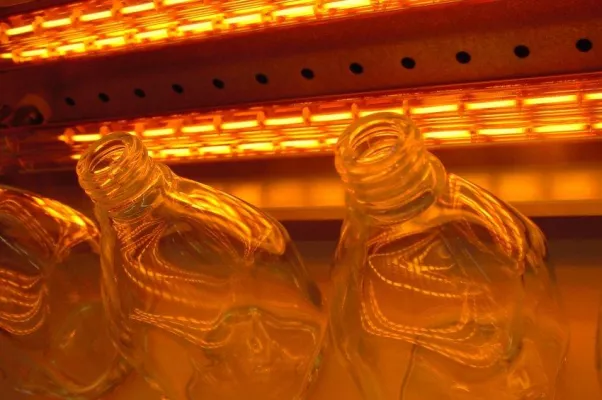
Phone glass curing is short-cycle, high-volume. Temperature uniformity and repeatability run the show. The lamp has to lay down a stable thermal profile across the glass, and it has to respond fast so the line keeps moving without killing adhesion. We use short-wave infrared (SWIR) elements in a quartz envelope. Quartz handles thermal shock and keeps emissivity consistent, so the lamp can cycle hard without drifting. The output is tuned to match how modern glass and adhesive systems absorb energy—less wasted heat, less risk of surface overshoot. Specs are picked for real integration and control:
- Power: 1–3 kW per module, sized to the cure zone and throughput.
- Voltage: 240 V single-phase or 380 V three-phase, depending on the line.
- Response: Full output in seconds, so setpoints can switch fast between products.
- Control: Closed-loop temperature feedback with PID tuning, and multi-segment zone control.
- Optics: Reflector geometry that creates a uniform thermal field, keeping edge-to-center deltas small.
- Interface: Standard industrial connectors and PLC-ready signals for drop-in replacement. It’s not about peak temperature. It’s about controlling the curve—ramp, soak, and cool—so the adhesive cures through, and the glass stays flat, without thermal stress.
Why it holds up in production
Phone glass assembly has a tight window. The glass is thin, edges are often curved, and adhesive thickness is controlled down to the micron. A lamp that heats quickly but unevenly will give you hot spots and cold zones. That shows up as bond-line inconsistency, and later as field failures. Our lamp gives you a uniform thermal field across the part. The payoff is predictable adhesion and fewer rejects from bubbles, weak edges, or stress baked into the bond. When the heat profile is repeatable, you can tighten controls and run with confidence. It also keeps up with line speed. Fast ramp and stable dwell let you cure in seconds, not minutes, without overshoot. More parts per hour, less time waiting for temperature recovery. Energy use drops too, because the energy goes where it’s needed and the system isn’t idling at high power. We’ve seen units run 5,000+ hours with less than 5% output drop, measured against the initial calibration curve. That kind of stability means fewer stops for lamp changes and consistent quality shift after shift.
The details that trip you up
This lamp is meant as a drop-in heating module, but the floor has real constraints.
- **Clearance matters.**Give the lamp enough standoff from the glass to keep uniformity and avoid local hot spots. If the fixture is tight, plan the mounting and beam angle early.
- **Emissivity isn’t constant.**Coated glass, printed edges, and different adhesives change absorption. You may need to tune the profile per product, or use zone control on larger parts.
- **Electrical fit has to line up.**Match voltage, phase, and connector type to your equipment. A mismatch turns into downtime fast.
- **Thermal management is part of the system.**The lamp runs hot, and the surroundings matter. Keep airflow consistent and don’t trap heat in the enclosure. If you’re ready to move from batch-and-wait to controlled, high-yield curing, start by matching the lamp to the process window. We’ll size the power, set the control strategy, and dial in the profile so the lamp works with your line, not against it.