Press is set, adhesive is laid down, glass is seated. Then comes the step that decides everything: the cure. If the heat front isn’t clean, you’re putting micro-stress into the glass. Ramp too slow, and the adhesive traps moisture—bond line shows up like a ghost. Dwell off, and you pay for it in scrap and rework. In mobile phone glass curing, that lamp isn’t just a light. It’s a thermal tool, pure and simple. 我们已经完成压合、涂胶、安放玻璃。接下来是决定一切的关键步骤:固化。如果热前沿不均匀,会在玻璃中产生微应力。加热斜率过慢,胶层会捕获湿气——粘接线会像幽灵一样显现。固化时间不当,则会导致废品和返工。在手机玻璃固化中,那盏灯不仅仅是光源,它就是一个纯粹的热处理工具。
We built this lamp for the floor, not the brochure. The whole design comes down to one requirement: repeatable heat delivery that keeps yield up and cycle time tight. 这款灯是为生产线设计的,而非宣传册。设计的核心要求是:热量传递可重复,确保良率稳定且周期时间紧凑。
What actually matters
关键要点
Phone glass curing is short-cycle, high-volume. Temperature uniformity and repeatability run the show. The lamp has to lay down a stable thermal profile across the glass, and it has to respond fast so the line keeps moving without killing adhesion. 手机玻璃固化周期短、产量大。温度均匀性和重复性是关键。灯具必须在玻璃表面形成稳定的热分布曲线,同时反应迅速,保证生产线连续运行且不影响粘接强度。
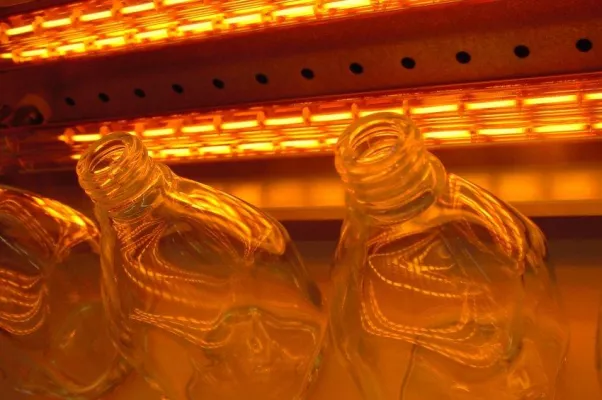
We use short-wave infrared (SWIR) elements in a quartz envelope. Quartz handles thermal shock and keeps emissivity consistent, so the lamp can cycle hard without drifting. The output is tuned to match how modern glass and adhesive systems absorb energy—less wasted heat, less risk of surface overshoot. 我们采用石英封装的短波红外(SWIR)元件。石英能承受热冲击且保持发射率稳定,使灯具能频繁切换而性能不漂移。输出波长经过调校,匹配现代玻璃及胶黏剂的吸收特性,减少热量浪费及表面超温风险。
Specs are picked for real integration and control: 参数选择基于实际集成与控制需求:
- Power: 1–3 kW per module, sized to the cure zone and throughput.
- 功率:每模块1–3 kW,依据固化区域和产能确定。
- Voltage: 240 V single-phase or 380 V three-phase, depending on the line.
- 电压:根据生产线需求,采用240 V单相或380 V三相。
- Response: Full output in seconds, so setpoints can switch fast between products.
- 响应速度:几秒内达到全功率,支持快速切换产品设定点。
- Control: Closed-loop temperature feedback with PID tuning, and multi-segment zone control.
- 控制方式:闭环温度反馈,PID调节,多段区域控制。
- Optics: Reflector geometry that creates a uniform thermal field, keeping edge-to-center deltas small.
- 光学设计:反射器几何形状保证热场均匀,边缘到中心温差小。
- Interface: Standard industrial connectors and PLC-ready signals for drop-in replacement.
- 接口:标准工业连接器和PLC兼容信号,支持即插即用。
It’s not about peak temperature. It’s about controlling the curve—ramp, soak, and cool—so the adhesive cures through, and the glass stays flat, without thermal stress. 关键不在于峰值温度,而在于控制加热曲线——升温、保温、冷却——确保胶层充分固化,玻璃保持平整,无热应力产生。
Why it holds up in production
生产中稳定性的原因
Phone glass assembly has a tight window. The glass is thin, edges are often curved, and adhesive thickness is controlled down to the micron. A lamp that heats quickly but unevenly will give you hot spots and cold zones. That shows up as bond-line inconsistency, and later as field failures. 手机玻璃组装工艺窗口狭窄。玻璃薄且边缘常有曲面,胶层厚度精确控制到微米级。加热速度快但不均匀的灯具会导致局部过热和冷区,表现为胶线不均,后续会出现现场失效。
Our lamp gives you a uniform thermal field across the part. The payoff is predictable adhesion and fewer rejects from bubbles, weak edges, or stress baked into the bond. When the heat profile is repeatable, you can tighten controls and run with confidence. 我们的灯具能在工件表面形成均匀热场,确保粘接强度稳定,减少气泡、边缘弱粘及热应力缺陷引起的报废。当热曲线可重复时,可以收紧工艺控制,生产更有保障。
It also keeps up with line speed. Fast ramp and stable dwell let you cure in seconds, not minutes, without overshoot. More parts per hour, less time waiting for temperature recovery. Energy use drops too, because the energy goes where it’s needed and the system isn’t idling at high power. 该灯具响应快,保温稳定,能在数秒内完成固化,无超温现象。产能提升,减少等待温度恢复的时间。能耗降低,因为热能用于关键区域,系统无需长时间高功率空转。
We’ve seen units run 5,000+ hours with less than 5% output drop, measured against the initial calibration curve. That kind of stability means fewer stops for lamp changes and consistent quality shift after shift. 实际应用中,设备运行超过5000小时,输出功率下降不到5%(相对初始校准曲线)。这种稳定性意味着减少更换灯管的停机次数,保证班次间质量一致。
The details that trip you up
可能导致问题的细节
This lamp is meant as a drop-in heating module, but the floor has real constraints. 该灯设计为即插即用加热模块,但车间环境存在实际限制。
- **Clearance matters.**Give the lamp enough standoff from the glass to keep uniformity and avoid local hot spots. If the fixture is tight, plan the mounting and beam angle early.
- **间隙要求严格。**保持灯具与玻璃的合理距离,保证热均匀,避免局部过热。如安装空间受限,应提前规划安装位置和光束角度。
- **Emissivity isn’t constant.**Coated glass, printed edges, and different adhesives change absorption. You may need to tune the profile per product, or use zone control on larger parts.
- **发射率非恒定。**涂层玻璃、印刷边缘及不同胶黏剂会影响吸收率。可能需要针对不同产品调节热曲线,或对大工件使用分区控制。
- **Electrical fit has to line up.**Match voltage, phase, and connector type to your equipment. A mismatch turns into downtime fast.
- **电气匹配必须准确。**电压、相数和连接器类型需与设备一致,匹配错误会导致快速停机。
- **Thermal management is part of the system.**The lamp runs hot, and the surroundings matter. Keep airflow consistent and don’t trap heat in the enclosure.
- **热管理是系统一部分。**灯具运行温度高,环境条件影响显著。保持气流稳定,避免热量在机壳内积聚。
If you’re ready to move from batch-and-wait to controlled, high-yield curing, start by matching the lamp to the process window. We’ll size the power, set the control strategy, and dial in the profile so the lamp works with your line, not against it. 若准备从批量等待转向受控高良率固化,首先要让灯具与工艺窗口匹配。我们将根据需求选定功率,设定控制策略,调校热曲线,确保灯具与生产线协同工作。