

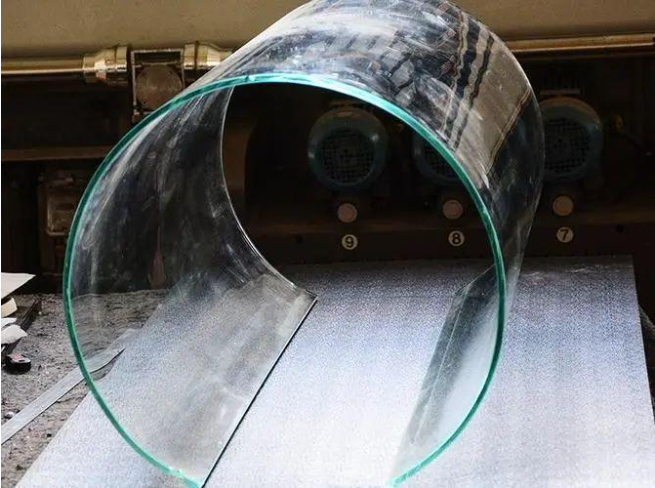
On the bending line, the heat profile is what makes or breaks the part. If the glass heats unevenly, you get roll-in, edge wave, and optical distortion—then you’re scrapping it. We designed our uniform heating modules to keep the thermal field flat across the entire sheet, so you hit the target radius without fighting thermal stress. What matters, technically Our bending heaters use short-wave quartz elements—high power density and fast response. That gets the glass to forming temperature quickly without scorching thin edges. The heating zones are mapped to the shape of the glass, and each zone is held to tight tolerance, so the center and the edges get the same energy input. The payoff is repeatable temperature uniformity, shorter cycle time, and fewer rejects from spring-back or optical defects. Why it holds up on the line In production bending, you’re moving fast, and there’s no room for hot spots or lag. Our module heats fast, stays stable, and drops cleanly into existing presses and furnaces. You get consistent bend repeatability, less rework, and lower energy per part because the system only delivers what’s needed to hit setpoint. That means higher throughput and yield you can plan around. A few shop-floor details Installation is straightforward—basically a drop-in—but the frame and reflectors have to be aligned precisely to keep uniformity. Expect a bit higher peak demand at startup, so check your feeder and busbar rating. Keeping emissivity matched and the heating chamber clean are the two simplest ways to keep the profile stable over long runs.