Getting Glass Tube Annealing Right
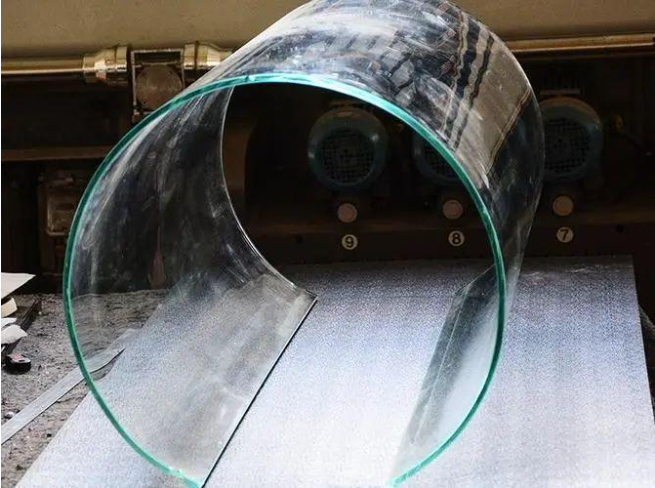
If you’ve ever dealt with glass tube annealing, you know the struggle. You need a perfect temperature gradient to get rid of those internal stresses, but if you push too hard, the whole thing just warps. That’s why we lean on shortwave infrared (IR) lamps. Instead of just heating the surface and hoping for the best, these lamps punch right through the glass and hit the core of the material almost instantly. It’s a much cleaner way to work.
The balancing act of power and voltage
Here’s the thing: you can’t just throw high wattage at a problem and call it a day. It’s all about heat density. If you cram a high-wattage lamp into a short quartz envelope, you get a massive concentration of heat. If your line is moving too slowly for that kind of power, you’ll end up with “hot spots” that ruin your glass. It’s a nightmare. We spend a lot of time balancing the voltage. We want that filament running at a steady, predictable temperature so it doesn’t just burn out while you’re running 24/7 cycles.
The nitty-gritty: Quartz and Connectors
We use high-purity quartz because it can take the hit of rapid heating and cooling without cracking. But the real headache is often the connectors. Whether it’s an R7s or a specialized Sk15, the fit has to be perfect. If it’s loose, you get vibration, thermal expansion, and eventually, arcing. That leads to localized melting, which is the last thing you want. We make sure those contact points are tight to keep resistance low. And for some setups, we use coated tubes. This helps push the energy into the glass rather than wasting it by heating up the oven chassis.
Real-world trade-offs
Let’s be honest: no lamp is a “plug-and-play” miracle. High-output IR lamps put off a ton of ambient heat. If your cooling fans or water jackets aren’t up to the task, your control boards are going to fry. Plain and simple. That’s why we prefer to come on-site. We need to see your actual thermal profile—find the cold spots and see where you’re losing radiation. Once we see it in action, we can figure out if you need a different wavelength or just a tweak in how the lamps are spaced to get that uniform finish.